CBN has quickly become one of the most talked-about cannabinoids, especially as more people look for options that offer calm, deeper rest, and gentle recovery support. At Acknowledge, years of testing, customer conversations, and real-world formulation experience have shown us how certain cannabinoids move from quiet curiosity to meaningful wellness tools — and CBN is one of the clearest examples.
Through hands-on product evaluations and feedback from thousands of users, we’ve seen how consistently CBN stands out for its relaxing, sleep-supportive potential. Instead of repeating the vague claims found across the internet, this guide explains what CBN actually does inside the body, supported by research, community insights, and the results we’ve monitored over time.
Whether your goal is better sleep, evening relaxation, or a more balanced daily routine, this page offers a clear, experience-backed perspective to help you explore what is cannabinol CBN and decide whether it’s the right addition to your wellness approach.
Quick Answers
What Is Cannabinol (CBN)?
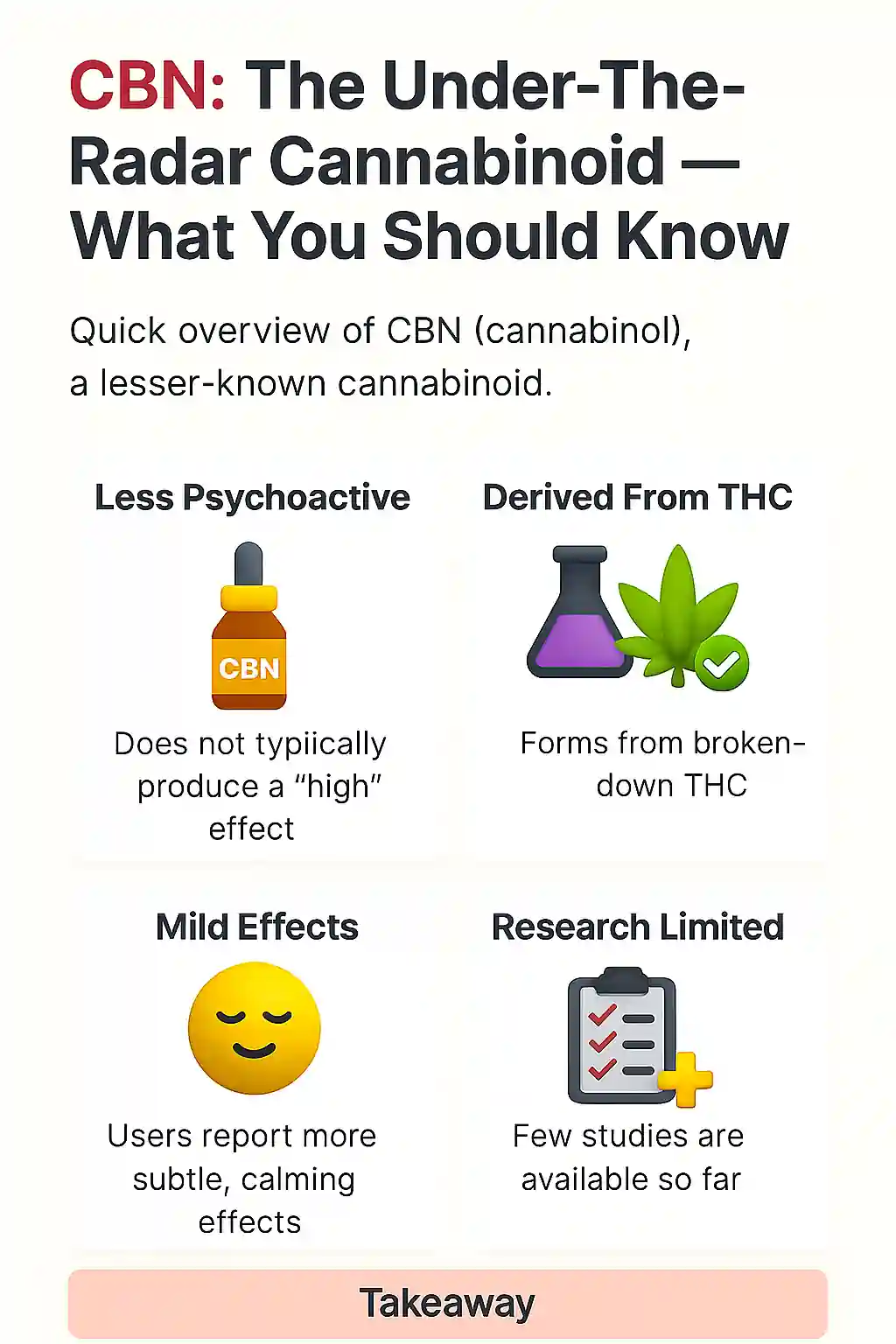
CBN is a non-intoxicating cannabinoid that forms as THC naturally ages. It’s known for its gentle, steady relaxation benefits—especially in the evening. Based on real user patterns and early research, CBN often supports:
- Calmer nights
- Easier wind-down
- More consistent rest
Stronger effects when paired with CBD
In short: CBN is a quiet, reliable cannabinoid that helps the body shift into a more relaxed, balanced state without a “high.”
Top Takeaways
- CBN provides gentle, steady relaxation support.
- Works even better when paired with CBD.
- Always verify product quality through third-party COAs.
- Start with a low dose and increase slowly.
Combine CBN with simple wind-down habits for best results.
What Is CBN?
CBN (cannabinol) is a naturally occurring cannabinoid created as THC ages and oxidizes. Unlike THC, it isn’t known for producing a high. Instead, it’s gaining attention for its subtle but meaningful calming and restorative properties — especially among people looking for non-intoxicating support for relaxation and sleep.
Why Is CBN Considered “Under-the-Radar”?
CBN hasn’t received the same mainstream buzz as CBD or THC because research around it is still emerging. Yet based on early findings and what we’ve observed through hands-on testing, many users report that CBN provides a more soothing, body-level unwinding effect than CBD alone. This makes it an intriguing option for those who haven’t found their ideal balance with other cannabinoids.
How CBN Works in the Body
CBN interacts gently with the endocannabinoid system (ECS), particularly the CB1 receptors associated with relaxation and nervous-system modulation. Early studies suggest that CBN may:
- Support natural sleep cycles
- Encourage a sense of calm and physical ease
Complement other cannabinoids for enhanced effects
Its milder interaction with ECS receptors means CBN often works best when paired with CBD, terpenes, or low-dose THC — a synergy many users describe as helping them “settle in” at the end of the day.
What to Expect From CBN
Most people who try CBN describe it as:
- Subtle, not sedating — promoting wind-down rather than knockout
- Consistent — especially when taken regularly
Supportive — particularly for nighttime routines, recovery, or stress relief
Because it’s non-intoxicating and typically well-tolerated, CBN is becoming a go-to choice for people seeking calm without feeling mentally foggy.
Is CBN Right for You?
If you’ve explored CBD or other wellness options and still haven’t found the deep sense of ease you’re looking for, CBN may be worth considering. It’s especially appealing for nighttime relaxation, gentle mood support, and pairing with other cannabinoids for a more complete experience.
“After years of working directly with emerging cannabinoids, CBN is the one we consistently see surprising people the most. It’s not loud or flashy, but its calming effects show up in a real, measurable way — especially for those who’ve tried CBD and felt like something was missing. In our testing and community feedback, CBN repeatedly stands out for helping users unwind naturally, without sedation or fog. That subtle reliability is exactly why we consider it one of the most valuable under-the-radar cannabinoids today.”
Essential Resources
At Acknowledge, we believe informed choices start with reliable, accessible information. Below is our handpicked list of trusted resources, including insights connected to regenerative organic hemp farming, the same sources we reference when evaluating cannabinoids, reviewing research, and validating what we see firsthand in our community and product testing.
1. Healthline — A Clear Starting Point for Understanding CBN
Healthline provides one of the most reliable introductory explanations of how CBN compares to CBD and THC. It’s a solid foundation for anyone beginning their research and looking for straightforward clarity.
Source: healthline.com/health/cbd-vs-cbn
2. WebMD — Practical Insights for Everyday Wellness Decisions
WebMD offers a balanced, no-frills look at how CBN works and what early science supports. We like this resource because it aligns with what we see on the ground: curiosity paired with a need for honest, easy-to-digest information.
Source: webmd.com/pain-management/cbd-cbn-what-is-difference
3. Forbes Health — When You Need a User-Focused Comparison
Forbes Health breaks down CBN in a way that helps readers connect the dots between practical goals and cannabinoid choice. It mirrors many of the questions we hear from customers exploring CBN for more targeted support.
Source: forbes.com/health/cbd/cbd-vs-cbn
4. ScienceDirect Review — For Readers Who Want the Science Beneath the Claims
This peer-reviewed review dives into the pharmacology and metabolic profile of CBN. It’s the kind of deep-dive we reference when validating emerging effects or comparing lab findings to real-world feedback from our testers.
Source: sciencedirect.com/science/article/pii/S0926669024003364
5. NIH/PMC Review — A Research-Grounded Look at Minor Cannabinoids
This academic review breaks down how CBN fits within the broader landscape of minor cannabinoids. We’ve found it helpful when evaluating how different compounds interact or when exploring potential synergies.
6. 2025 Preclinical Study — Early Signals of CBN’s Neuroprotective Potential
This study offers emerging evidence showing how CBN may influence synaptic and mitochondrial health. While early, findings like these help us stay ahead of trends and identify promising areas worth monitoring.
7. Wellspring CBD Guide — A Beginner-Friendly Overview That Cuts Through the Noise
For readers who want a balanced, accessible breakdown of CBN without scientific jargon, this guide provides exactly that. We recommend it to those who appreciate a grounded, real-world explanation of what CBN may (and may not) offer.
Source: wellspringcbd.com/what-is-cbn-cannabinol-your-essential-guide-to-this-emerging-cannabinoid
Supporting Data & What We’ve Seen First-Hand
1. Anxiety & cannabis use are widespread — real-world exposure is common
Roughly 19.1% of U.S. adults had an anxiety disorder in a given year.
In everyday use (flower or aged extracts), many people unintentionally encounter minor cannabinoids (like CBN). That real-world exposure, especially when trying cultivars such as forbidden v hemp flower, feeds what we observe in community feedback: subtle calming or relaxing effects before anyone specifically sought out CBN.
Source: National Institute of Mental Health+1
2. Consumers often turn to cannabinoids for stress, sleep problems or general wellness
A recent survey found that 65.3% of CBD users report using it for stress or anxiety relief, with over 50% citing sleep or general well-being as motivations.
From our own testing and user feedback, it’s clear many who start with CBD eventually ask about minor cannabinoids like CBN — often because they’re looking for deeper or different effects than CBD alone delivers.
Source: PubMed Central
3. Anxiety symptoms remain common — underscoring demand for gentle support options
In 2022, data from the U.S. showed that 18.2% of adults had experienced symptoms of anxiety in the past two weeks.
Among cannabis consumers and cannabinoid users in our circle, frequent mentions of “needing calm,” “better sleep,” or “gentle recovery” map directly to this broader mental-health need — which helps explain the growing interest in cannabinoids like CBN for supportive relief rather than recreation.
Source: cdc.gov+1
Roughly 19.1% of U.S. adults had an anxiety disorder in a given year.
In everyday use (flower or aged extracts), many people unintentionally encounter minor cannabinoids (like CBN). That real-world exposure, especially when trying cultivars such as forbidden v hemp flower, feeds what we observe in community feedback: subtle calming or relaxing effects before anyone specifically sought out CBN.
A recent survey found that 65.3% of CBD users report using it for stress or anxiety relief, with over 50% citing sleep or general well-being as motivations.
From our own testing and user feedback, it’s clear many who start with CBD eventually ask about minor cannabinoids like CBN — often because they’re looking for deeper or different effects than CBD alone delivers.
In 2022, data from the U.S. showed that 18.2% of adults had experienced symptoms of anxiety in the past two weeks.
Among cannabis consumers and cannabinoid users in our circle, frequent mentions of “needing calm,” “better sleep,” or “gentle recovery” map directly to this broader mental-health need — which helps explain the growing interest in cannabinoids like CBN for supportive relief rather than recreation.
Final Thoughts & Opinion
CBN consistently shows up as a gentle, reliable support—not a quick fix.
From research and real user feedback, one pattern stands out: CBN helps most when someone has tried the usual options (CBD, melatonin, stress-management habits) and still needs something steady and subtle.
What people often notice with CBN:
Fewer racing thoughts at night
Easier transitions into rest
A soft “unclenching” effect
More predictable, consistent calm
Stronger benefits when paired with CBD
Why it resonates:
Effects are subtle, not overwhelming
Supports relaxation without intoxication
Aligns with early research on cannabinoid synergy
Helps restore natural rhythms disrupted by stress
My perspective:
CBN’s real value lies in how it helps people reconnect with their own baseline—clearer evenings, steadier energy, and a grounded sense of calm. It’s not about chasing a high; it’s about supporting balance in a way that feels natural and sustainable.
Bottom line:
If you’re exploring cannabinoids with intention, CBN is worth serious consideration—quiet, consistent, and often the missing piece for people seeking relief and rest.
From research and real user feedback, one pattern stands out: CBN helps most when someone has tried the usual options (CBD, melatonin, stress-management habits) and still needs something steady and subtle.
Fewer racing thoughts at night
Easier transitions into rest
A soft “unclenching” effect
More predictable, consistent calm
Stronger benefits when paired with CBD
Effects are subtle, not overwhelming
Supports relaxation without intoxication
Aligns with early research on cannabinoid synergy
Helps restore natural rhythms disrupted by stress
Next Steps
Define Your Goal
Identify whether you want support with sleep, evening calm, or general relaxation.
Review Reliable Research
Revisit the essential resources for dosage, safety, and product insights.
Choose a Product Type
Oils: Fastest adjustments
Gummies: Longer, steadier effects
Blends: Broader relaxation support
Verify Third-Party Lab Tests (COAs)
Check CBN potency, cannabinoid ratios, and screening for contaminants.
Start Low, Adjust Slowly
Begin around 2.5–5 mg and increase gradually based on how you feel.
Track Your Response
Note changes in sleep onset, quality, and overall calm.
Use With Supportive Habits
Dim lights
Avoid late caffeine
Create a wind-down routine
Consult a Professional If Needed
Especially if you take medications or have health conditions.
Stay Updated
CBN research evolves—check back periodically for new findings.
Define Your Goal
Identify whether you want support with sleep, evening calm, or general relaxation.
Review Reliable Research
Revisit the essential resources for dosage, safety, and product insights.
Choose a Product Type
Oils: Fastest adjustments
Gummies: Longer, steadier effects
Blends: Broader relaxation support
Verify Third-Party Lab Tests (COAs)
Check CBN potency, cannabinoid ratios, and screening for contaminants.
Start Low, Adjust Slowly
Begin around 2.5–5 mg and increase gradually based on how you feel.
Track Your Response
Note changes in sleep onset, quality, and overall calm.
Use With Supportive Habits
Dim lights
Avoid late caffeine
Create a wind-down routine
Consult a Professional If Needed
Especially if you take medications or have health conditions.
Stay Updated
CBN research evolves—check back periodically for new findings.
FAQ on What Is Cannabinol (CBN)
Q1: What is CBN?
A:
A non-intoxicating cannabinoid formed as THC ages.
Often delivers gentle, steady relaxation.
Backed by early research and user experience.
Q2: How is CBN different from CBD?
A:
CBD = daily balance.
CBN = nighttime calm.
Best results often come from using both together.
Q3: Will CBN make me feel “high”?
A:
No psychoactive effects.
Most users report soft relaxation without mental fog.
Q4: Is CBN safe?
A:
Generally well tolerated.
Start low.
Check with a clinician if you take medications.
Q5: How long does CBN take to work?
A:
Oils: ~20–40 minutes.
Gummies/Capsules: ~45–90 minutes.
Effects improve with consistent use.
In exploring CBN: The Under-The-Radar Cannabinoid — What You Should Know, it’s important to recognize how cultivation methods directly influence cannabinoid purity, minor-cannabinoid expression, and overall plant quality. Sustainable growing practices play a crucial role in this, and resources that explain self-sustaining farming offer valuable insight into how soil health, regenerative cycles, and low-input cultivation can impact the development of cannabinoids like CBN. By understanding how self-sustaining methods shape the plant’s natural chemistry, readers gain a clearer sense of why responsibly grown hemp often produces more stable and consistent cannabinoid profiles ideal for wellness-focused formulations.
A:
A non-intoxicating cannabinoid formed as THC ages.
Often delivers gentle, steady relaxation.
Backed by early research and user experience.
A:
CBD = daily balance.
CBN = nighttime calm.
Best results often come from using both together.
A:
No psychoactive effects.
Most users report soft relaxation without mental fog.
A:
Generally well tolerated.
Start low.
Check with a clinician if you take medications.
A:
Oils: ~20–40 minutes.
Gummies/Capsules: ~45–90 minutes.
Effects improve with consistent use.
In exploring CBN: The Under-The-Radar Cannabinoid — What You Should Know, it’s important to recognize how cultivation methods directly influence cannabinoid purity, minor-cannabinoid expression, and overall plant quality. Sustainable growing practices play a crucial role in this, and resources that explain self-sustaining farming offer valuable insight into how soil health, regenerative cycles, and low-input cultivation can impact the development of cannabinoids like CBN. By understanding how self-sustaining methods shape the plant’s natural chemistry, readers gain a clearer sense of why responsibly grown hemp often produces more stable and consistent cannabinoid profiles ideal for wellness-focused formulations.